
A simple frustration. A fundamental question.
It started with one account too many.
Another website.Another account.Another password.Another verification email.Another company asking for information it probably doesn't need.
At some point, frustration turned into a simple question:
Why do we have to recreate our identity every time we interact with the digital world?
SAUPHI was born from that question.

Something went fundamentally wrong.
The internet has transformed nearly every aspect of human life. Yet participating in it often means repeatedly handing over pieces of ourselves.
We create accounts to buy products.
We create accounts to access information.
We create accounts to manage other accounts.
We provide the same personal information to organizations that have no meaningful relationship with one another.
We accept privacy policies we rarely have the time to read, manage credentials we struggle to remember, and hope that every organization holding our information will protect it indefinitely.
What began as a practical inconvenience revealed a deeper architectural problem.
The digital world was built around organizations managing identities, rather than individuals controlling their own.
SAUPHI is an attempt to rethink that relationship.
The questions that started everything
- Why does proving my age require revealing my date of birth?
- Why does buying something require creating a permanent account?
- Why must so many organizations keep copies of my personal information?
- Why should unrelated services be able to connect my activities?
- Why should losing access to an account mean losing part of my digital existence?
- Why should my identity depend on the continued existence of a private company?
- Why have we accepted these inconveniences as an unavoidable part of modern life?
Perhaps the problem is not how we manage our accounts. Perhaps the problem is that accounts became our identities.
An idea should not belong to its creator.
SAUPHI began as an independent initiative driven by a belief that digital identity could be fundamentally different.
But an identity protocol intended to protect human sovereignty cannot itself depend on the authority of its founder.
The project is intended to evolve through open research, transparent technical decisions, independent review and community participation.
Its principles must remain valid regardless of who contributes to it, implements it or maintains it.
No founder should become indispensable.
No organization should become irreplaceable.
No institution should acquire exclusive control over the protocol.
The ambition is to build something capable of outliving the people who started it.
What SAUPHI stands for
- S
- Sovereign
- A
- Autonomous
- U
- Universal
- P
- Protocol for
- H
- Human
- I
- Identity
Sovereign Autonomous Universal Protocol for Human Identity
Sovereign
Identity belongs to the individual.
Autonomous
Individuals should not depend on a mandatory central authority to exercise control over their digital identities.
Universal
The protocol should be accessible and interoperable across organizations, technologies and jurisdictions, without requiring universal participation.
Protocol
SAUPHI defines a proposed framework for interaction, not a centralized service that owns those interactions.
Human Identity
Technology should serve the individual, not reduce the individual to a collection of records, accounts and identifiers.
Success means becoming less necessary.
Most digital platforms seek more users, more interactions, more information and greater dependence on their services.
SAUPHI aims for a different measure of success.
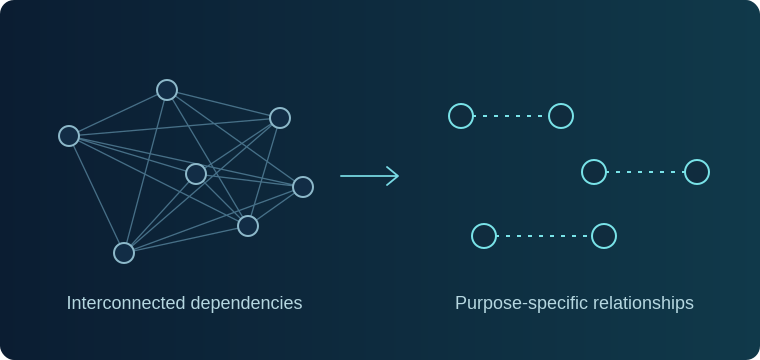
- Fewer unnecessary accounts.
- Fewer passwords.
- Fewer copies of personal information.
- Fewer opportunities for surveillance.
- Fewer dependencies on centralized authorities.
- More independence.
- More privacy.
- More freedom.
The ultimate ambition is not for everyone to depend on SAUPHI.
It is for individuals to depend less on anyone for control over their identity.
At the beginning. By design.
SAUPHI is currently in its founding and architectural design phase.
The founding manifesto establishes the principles that will guide the project.
The technical architecture, security model, governance framework and reference implementations remain to be developed, evaluated and independently reviewed.
We do not claim to have solved digital identity.
We believe the problem deserves to be approached differently.
We intend to document the journey openly, including difficult questions, technical limitations, architectural trade-offs and lessons learned.
There is no finished product being sold here.
There is an idea being built in the open.
Our commitments
- Human sovereignty before institutional convenience.
- Privacy before unnecessary data collection.
- Open standards before proprietary dependency.
- Security before speed of adoption.
- Transparency before blind trust.
- Evidence before promises.
- Voluntary participation before enforced adoption.
The founding manifesto is the authoritative expression of these principles.
We should not have to choose between participating in modern society and retaining control over our identity.
We should not have to become another account, another database entry or another product.
We are human beings.
Technology should remember that.
One human. Many identities. No master.